Cycle of Creativity: Designing for the Open Road
There is a specific kind of joy found in the rhythm of a long ride—the hum of tires on asphalt, the wind cutting through the silence, and the sense of forward motion. For designers, entrepreneurs, and cycling enthusiasts looking to capture this energy, translating that feeling into a tangible product is the ultimate goal. A powerful Cycling T-Shirt Design does more than just cover a back; it tells a story of passion, endurance, and a lifestyle that refuses to slow down. If you are looking to create merchandise that resonates with the athletic community, understanding the anatomy of a high-quality vector graphic is your first step toward the podium.
Visualizing the Ride: Anatomy of a Strong Design
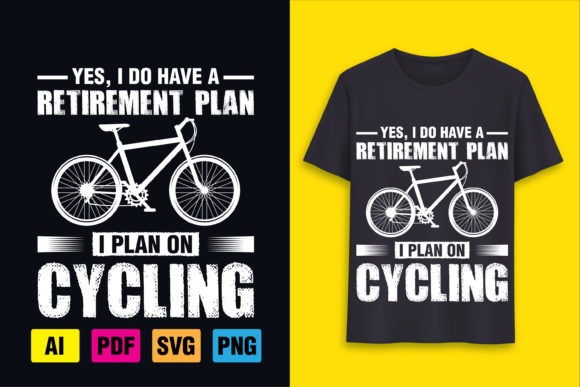
When you look at the "Yes, I Do Have A Retirement Plan I Plan On Cycling" concept, it taps into a very specific, relatable emotion for the demographic aged 30 to 60. It is humorous, defiant, and deeply personal. However, the sentiment alone isn't enough to sell a product. The visual execution determines whether a customer stops scrolling or keeps moving. This particular design asset leverages clean lines and scalable vectors, ensuring that whether it is printed on a small chest pocket or a massive back panel, the integrity of the image remains intact.
The use of 100% vector graphics is not just a technical specification; it is a practical necessity for modern branding. Unlike rasterized images that pixelate when scaled, vector files allow for infinite resizing without loss of quality. For a small business owner or content creator, this means the same core asset can be repurposed across various media. You aren't just buying a graphic for a shirt; you are acquiring a versatile piece of design assets that can be adapted for different contexts.
Expanding Horizons: Beyond the Cotton Tee
While the primary application is apparel, limiting a strong graphic to a single product is a missed opportunity for revenue and brand visibility. The nature of this specific file package—which includes AI, PNG, PDF, and SVG formats—opens the door to a multi-channel product strategy. Consider the versatility required by a modern creative entrepreneur. A design that works on a moisture-wicking jersey can easily transition to hard goods.
Here are practical ways to deploy this design for maximum impact:
- Hard Goods & Drinkware: Cycling culture is intrinsically linked to hydration and coffee culture. Applying this design to ceramic mugs or stainless steel water bottles creates high-margin upsells. The vector nature ensures the text remains crisp, even on curved surfaces where printing can be tricky.
- Print on Demand: For those utilizing dropshipping models, having a high-resolution (300 DPI) file ready to go minimizes production errors. The 4500x5400 pixel dimension is substantial enough for large-format printing, ensuring your poster cards and wall art look professional.
- Digital Presence: Social media graphics thrive on engagement. A witty, well-designed image can serve as the focal point for an Instagram post or a Facebook ad. The PNG file allows for easy overlaying onto lifestyle mockups, helping you visualize the product in real-world scenarios before committing to inventory.
- Packaging and Branding: If you run a cycling accessories shop, this graphic can serve as a brand identity element on mailer boxes, tissue paper, or thank-you cards, creating a cohesive unboxing experience that reinforces the customer's love for the sport.
Technical Precision Meets Artistic Freedom
One of the biggest hurdles in graphic design is the "locked" feeling of a finished file. We have all been there—you find a perfect image, but the colors don't match your brand palette, or the background is opaque when you need it transparent. This is where the "Easy to modify and change color" feature becomes a game-changer for branding consistency.
Imagine you are a brand strategist developing a line for a local cycling club. Their colors are neon green and black, but the stock design is in red and white. With a fully editable vector file (like the included .AI or .SVG), you can swap these colors in seconds. This level of customization allows you to maintain visual consistency across all your marketing assets. You can match the typography and illustration style to the specific vibe of your project—whether that is aggressive and competitive, or leisurely and recreational.
Furthermore, the inclusion of multiple file formats speaks to a professional workflow. The SVG file is particularly valuable for web design, as it loads faster and scales perfectly on responsive websites. The PDF is essential for print shops that require specific formatting, while the High quality PNG is the universal workhorse for quick mockups and social sharing.
Strategic Design for a Niche Audience
The text "Yes, I Do Have A Retirement Plan I Plan On Cycling" is a prime example of niche targeting. It isn't for everyone, and that is precisely why it works. In marketing, speaking directly to a subculture creates a stronger bond than generic messaging. This design validates the lifestyle of the dedicated cyclist who sees riding not just as a hobby, but as a life goal.
When using this design for editorial layouts or blog headers, it sets a tone immediately. It tells the reader that this space is for the serious enthusiast. For packaging design, it adds a layer of personality that a standard logo might lack. It humanizes the brand, showing that the creators understand the customer's priorities.
From a typography perspective, a design like this relies on readability. The hierarchy is usually clear: the punchline ("I Plan On Cycling") needs to be legible from a distance, often achieved through bold sans serif or impactful display font styles. If you are pairing this graphic with other text in a larger layout, consider using a complementary font pairing. For example, if the design uses a blocky, industrial typeface, balance it with a clean, modern sans-serif for body text to ensure professional presentation.
Practical Application for Entrepreneurs
For the entrepreneur entering the print-on-demand space, assets like this are the lifeblood of the business. The time saved by not having to illustrate a bicycle from scratch or typeset a complex phrase is time that can be spent on SEO, customer service, or sourcing new blanks.
Consider the lifecycle of this single asset:
- The Launch: Use the design on T-shirts and Hoodies for an initial collection drop.
- The Expansion: Apply the graphic to tote bags and posters for holiday gift guides.
- The Brand Building: Use elements of the design (perhaps just the bicycle icon or the typography) to create logo design variations or favicon icons for your website.
This approach treats the design not as a static image, but as a flexible element of your brand identity. It allows you to create a world around the product. A customer who buys the shirt might also buy the mug for their office, and the sticker for their water bottle, provided the design is presented cohesively across these items.
Ultimately, the goal of a design like this is to spark a connection. It is about recognizing the dedication of the cyclist and offering them a piece of merchandise that speaks their language. By utilizing high-resolution, editable vector assets, you ensure that the quality of your product matches the quality of the ride they love.